Stay informed with the latest city alerts, including unexpected closures, inclement weather updates, service disruptions, and other time-sensitive notices. This page is updated as new information becomes available. For planned closures and observed holidays, please visit our Closures & Holidays schedule.
City Hall will be closed on Tuesday, February 10, due to illness. We apologize for any inconvenience and appreciate your understanding.
To ensure the safety of city employees due to sub-freezing temperatures, potential black ice, and hazardous travel conditions, city offices will operate on a delayed schedule on Monday, February 2.
Offices will be open from 12:00 PM to 4:00 PM.
Please be advised that city resources are limited. Neighborhood & City streets will not be treated or plowed. However, TDOT will be responsible for maintaining Hwy 68 / Ocoee Street.
Parking Advisory: If you need continued access to main roads, it is advisable to park in public parking areas within downtown, as conditions impact neighborhood access. Please get permission from the property owner if it is a private lot.
City Hall Operations: We will assess conditions Sunday evening and make a determination regarding City Hall operations for Monday. Updates will be shared as soon as a decision is made.
Please use caution, plan ahead, and stay safe.
Understanding Temperature Limits for Ice Melters
Here's what happens when salt isn't working:
When you drive on snow-covered roads in temperatures below 15°F, your tires compress and compact the snow. The pressure from your vehicle, combined with the friction, creates enough heat to melt the bottom layer of snow just slightly.
The dangerous part: Because it's so cold and the salt can't work, this thin layer of melted snow immediately refreezes into a smooth, slick layer of ice. Each car that drives over it packs it down more, making it harder and slicker.
The result: What started as somewhat manageable snow becomes a dangerous ice rink. This is especially bad on hills, curves, and intersections where cars brake and accelerate. Without salt working, there's nothing to prevent this cycle.
This is why roads can actually become MORE dangerous after traffic drives on them in extreme cold!
To ensure the safety of city employees due to sub-freezing temperatures, potential black ice, and hazardous travel conditions, city offices will operate on a delayed schedule on Tuesday, January 27.
Offices will be open from 10:00 AM to 4:00 PM.
Due to sub-freezing temperatures, overnight snowfall, hazardous road conditions, and concerns for employee safety, city offices will be closed on Monday, January 26.
Conditions will continue to be monitored, and updates will be shared as they become available.
To ensure the safety of city employees due to sub-freezing temperatures, potential black ice, and hazardous travel conditions, city offices will operate on a delayed schedule on Monday, January 26.
Offices will be open from 11:00 AM to 4:00 PM.
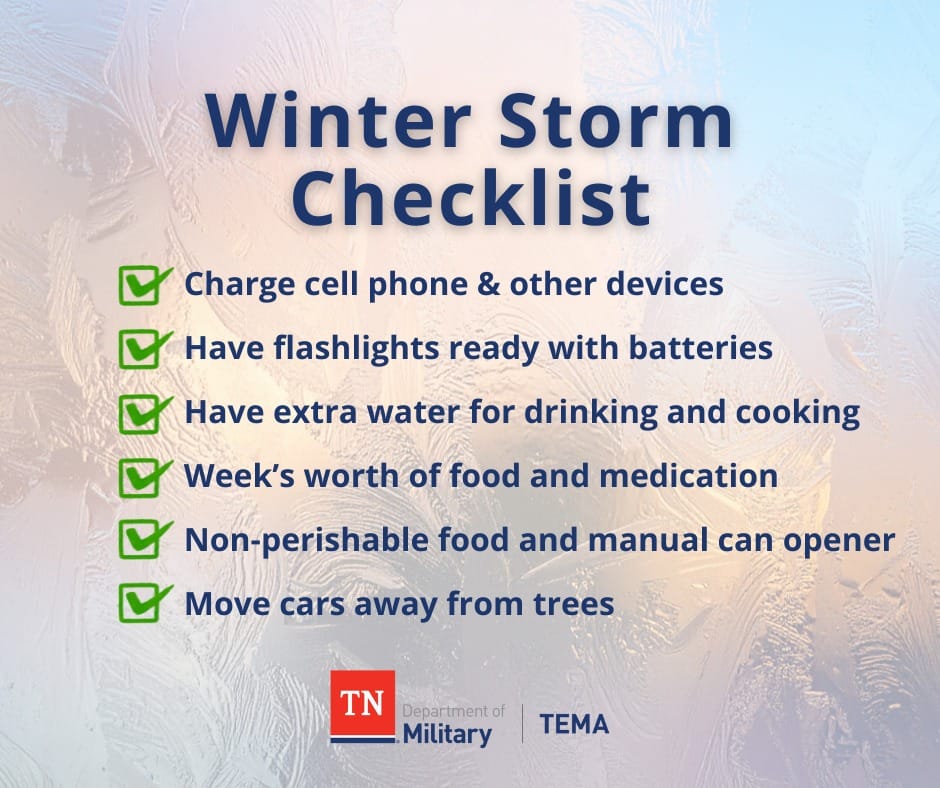
The City of Copperhill will begin pre-treating downtown sidewalks today at 2:00 PM in preparation for Winter Storm Fern.
Please be advised that resources are limited. Neighborhood & City streets will not be treated. However, TDOT will be responsible for maintaining Hwy 68 / Ocoee Street.
Parking Advisory: If you need continued access to main roads, it is advisable to park in public parking areas within downtown, as conditions may impact neighborhood access. Please get permission from the property owner if it is a private lot.
City Hall Operations: We will assess conditions Sunday evening and make a determination regarding City Hall operations for Monday. Updates will be shared as soon as a decision is made.
Please use caution, plan ahead, and stay safe.
Unexpected closures, service disruptions, and important notices