
Step Inside History · Copperhill's Historical Buildings & Landmarks See All Historic Sites

121 Ocoee Street · Established 1927

From Greece to Copperhill: 80 Years of Greek Hospitality

Copperhill carries the layered history of industry, immigration, and community. Among the many groups who helped shape the town, Greek immigrants left an enduring mark through food, hospitality, and small business ownership. For nearly eighty years, Greek-owned restaurants anchored daily life in Copperhill, feeding miners and townspeople alike and becoming woven into the rhythm of the Copper Basin.

The Copper Basin: An Industrial Landscape

Copper was discovered in the region in 1843, transforming the landscape. By the 1850s, large-scale mining operations employed over 2,500 workers at their peak. The Tennessee Copper Company, formed in 1899, became the dominant force, establishing Copperhill as a company town.

Open-roast smelting released massive amounts of sulfur dioxide, creating acid rain that devastated the environment. By 1878, over 50 square miles had been stripped of all vegetation, creating what was called “the largest man-made biological desert in the nation.” The red clay hills earned comparisons to the surface of Mars.

The Greek Migration to America

The Greek families who settled in Copperhill came from places far removed from the Appalachian landscape. Their roots traced to Kalamata on the southern Peloponnese and to the Aegean islands of Lesvos and Chios. These were regions shaped by olive groves, fishing harbors, stone villages, and long traditions of family labor and small commerce.

The Great Greek Migration

Between 1890 and 1921, approximately 421,000 Greeks immigrated to the United States, driven by economic hardship following Greece’s independence from the Ottoman Empire. The collapse of currant prices in the 1890s—when Greece’s major export was legislated out of French and Russian markets—pushed many to emigrate.

About 95% of Greek immigrants arriving between 1899 and 1910 were young men, often seeking to earn money for family dowries or to support relatives back home. Most initially planned to return to Greece, though nearly half stayed permanently. Greeks in the South, lacking industrial job opportunities common in the North, turned to small business ownership, particularly in food service.

Economic hardship and limited opportunity in the late nineteenth and early twentieth centuries pushed many young Greeks to emigrate. Though the red hills of the Copper Basin bore little resemblance to the Mediterranean world they left behind, they carried with them values of hard work, hospitality, and adaptability that would define their success in Copperhill.

The New York Cafe

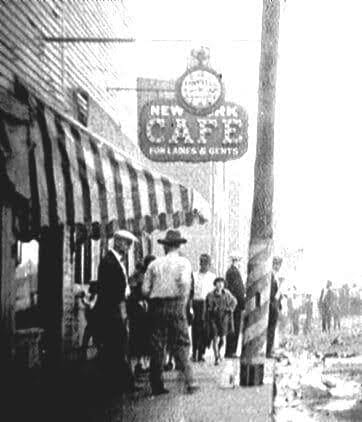
That success began in December 1927, when Gus Grevis, a Greek immigrant, established the New York Cafe and Hotel. From the start, the New York was not an exotic outpost of Greek culture but a place firmly rooted in local tastes. Breakfasts featured eggs, grits, sausage, ham, bacon, and pancakes large enough to fill the plate. Lunch meant oversized hamburgers, fried okra, slow-cooked green beans, and other Appalachian staples. The menu reflected a clear understanding of the community it served.

The New York Cafe c. 1925
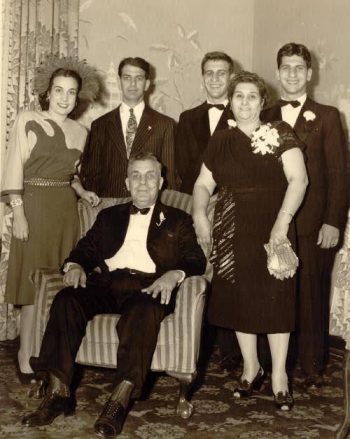
gervis-family

The Grevis family, founders of the New York Cafe and Hotel

Front: Gus (seated) and Lena Grevis. Back row: Virginia and husband George Grevis, Andrew Grevis, Chris Grevis.

The decision to serve American food was both practical and intentional. In the early twentieth century, ethnic restaurants were virtually unknown in the mountains of Tennessee, North Carolina, and Georgia. Greek restaurateurs knew that acceptance and success depended on meeting their neighbors where they were. At the same time, serving familiar food allowed them to become part of the town rather than outsiders within it.

Behind the counter, however, the owners and cooks carried a culinary heritage far different from what appeared on the menu.

At home they knew dishes such as moussaka, pastitsio, stuffed grape leaves, and fried eggplant. In public, they served the food Copperhill loved. What endured was not the cuisine itself but the values behind it. Consistency, generosity, and family involvement defined the New York as much as the food it served.

The New York Cafe and Hotel quickly became a gathering place for Copperhill’s working population, especially miners coming off long shifts. Gus Grevis’s wife, Lena, became locally famous for the pies she baked, which were widely regarded as the best in town. Her pies were especially popular with miners, many of whom ate most of their meals at the café and counted dessert as an essential part of the day. All five of the Grevis children worked in the family business, reinforcing the restaurant’s role as both livelihood and legacy. The New York was originally located across the street from what is now Talent’s Pharmacy before moving into the brick building that would become a downtown landmark.

Greek Restaurants in America

By 1919, one of every three restaurants in Chicago was operated by Greeks. The restaurant business required little start-up capital and could employ family members, making it ideal for immigrant entrepreneurs seeking economic stability and social respectability. Greek immigrants founded more than 600 diners in the New York metropolitan area between the 1950s and 1970s, establishing food service as a cornerstone of Greek-American success.

In the early 1950s, ownership passed to another Greek family when Pete Xeriches purchased the New York. Pete had immigrated from Greece in 1940 and arrived in Copperhill two years later, initially working for Grevis. This pattern of mentorship and shared opportunity was common among Greek immigrants. After Pete’s death in 1965, the restaurant remained in Greek hands, operated by his widow Stella, their daughter Jenny, and son-in-law Takis Gaitanoglou.

Dino's New York Pub

The next chapter unfolded with Dino Bouloukos, a Greek immigrant from Kalamata who married Maria Xeriches. In 1972, the Bouloukos family moved to Copperhill seeking a quieter life and stronger sense of community than they found in New York City. Dino purchased the bar on Ocoee Street from his brother-in-law Takis and renamed it Dino’s New York Pub. Like the New York Cafe and Hotel, the pub became a familiar and welcoming place, reflecting the same community-centered spirit that had defined Greek-owned establishments in Copperhill for decades.

1843
Copper discovered in the Copper Basin, launching an industrial boom
1890-1921
Approximately 421,000 Greeks immigrate to the United States
December 1927
Gus Grevis establishes the New York Cafe and Hotel in Copperhill
Early 1950s
Pete Xeriches purchases the New York Cafe from the Grevis family
1972

Dino Bouloukos establishes Dino's New York Pub
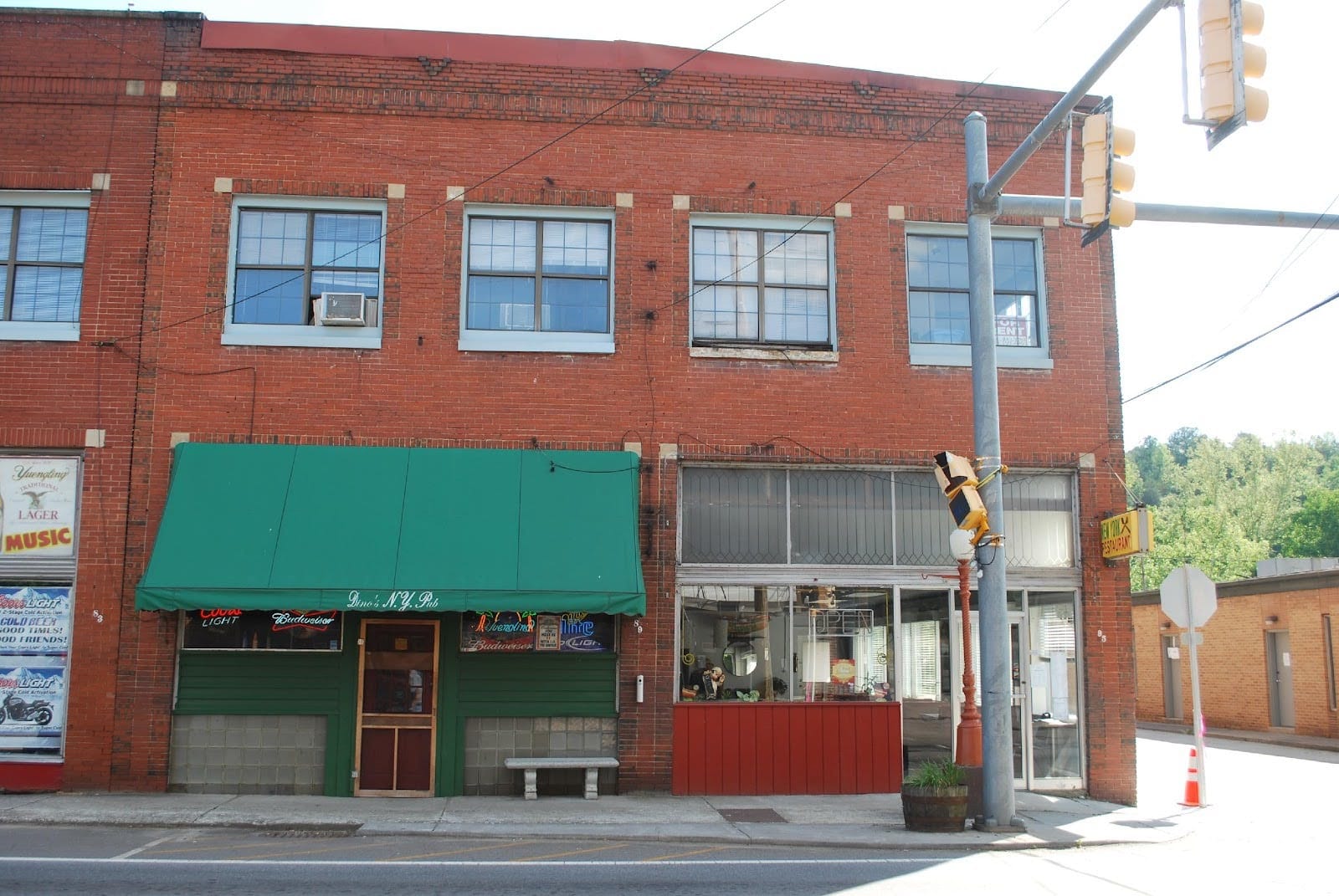
Dino's New York Pub
1987
Copper mining operations cease in the Copper Basin
2005
Dino's New York Pub closes, ending nearly 80 years of Greek-owned dining
2012
New York Cafe closes under new ownership
2013
Building purchased and renovated by Chris O'Neal, preserving historic structure
Greek ownership of the New York Cafe and Hotel as well as Dino’s New York Pub spanned periods of growth and decline in the Copper Basin. In 2005, Dino’s New York Pub closed, marking the end of nearly eighty years of Greek-owned dining establishments in Copperhill. The New York Cafe continued under new ownership for several more years before closing in 2012, when changing sanitation regulations and financial pressures made continued operation impossible.

Following the closure, the once-bustling building fell into visible decline. In 2013, local resident Chris O’Neal purchased the deteriorated property and undertook extensive renovations that restored the structure to its original character. Through that effort, a key piece of Copperhill’s downtown fabric was preserved, allowing the building to continue serving the community in a new way.

The story of Greek immigrants in Copperhill is not one of spectacle or separation. It is a story of quiet integration, resilience, and belonging.

Today, the renovated building that once housed the two establishments serves a different purpose, but its walls still hold the memory of countless meals, conversations, and working lives. The story of Greek immigrants in Copperhill is not one of spectacle or separation. It is a story of quiet integration, resilience, and belonging. Through the New York Cafe and Hotel as well as Dino’s New York Pub, Greek families helped define what it meant to be part of the Copper Basin, one plate, and one pie, at a time.

Sources & References

  • Knoxville Journal, December 11, 1927
  • The Knoxville News-Sentinel, July 21, 1965, p. 10
  • “The Greeks in America” by Theodore Saloutos, Harvard University Press, 1964
  • “Greek Immigration in the United States: A Historical Overview,” Hellenic American Project, accessed February 2026, https://www.hapsoc.org
  • “Greek Immigrants,” EBSCO Research Starters, accessed February 2026, www.ebsco.com
  • “A History of Copperhill, Tennessee,” Carolina Ocoee, October 10, 2018, carolinaocoee.com
  • “Acid rain devastates Tennessee’s Copper Basin,” Appalachian History, July 4, 2021, appalachianhistory.net
  • “Greek Immigrants and Labor,” Immigrant Alexandria, accessed February 2026, immigrantalexandria.org
  • “The History of Greek Immigration to America,” Hellenic American Project, January 26, 2022, www.hapsoc.org
  • U.S. Immigration and Naturalization Services data, 1890-1921
  • “Copper Basin Mining District,” Tennessee Department of Environment and Conservation, accessed February 2026, www.tn.gov
About This Project

This historical documentation project was developed by the City of Copperhill in partnership with Discover Copper Basin, a 501(c)(3) nonprofit organization, with funding from the Tennessee Department of Economic and Community Development / Tennessee Downtowns Program. Content writing and research contributions by Steve Procko and Dr. Kathleen Thompson.